Cutty Sark Tall Ships’ Races 1996
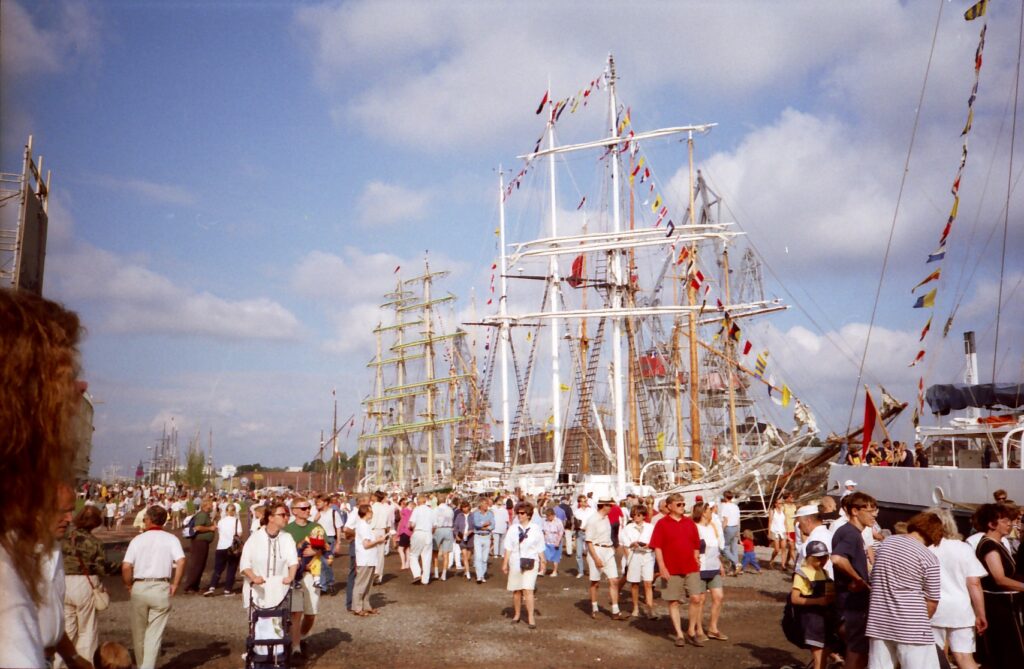
The Cutty Sark Tall Ships’ Races, held from 31 July to 3 August 1996, was a historic event, as it marked the first time that Turku served as the host city for this major international event. Previously, the ships had been seen in Mariehamn and Helsinki. The event attracted approximately 400,000 visitors to the banks of the Aura River and permanently transformed the city’s relationship with its river.
The Tall Ships Races events held in Turku have had a significant impact on the development of the culture of the Aura River and on the growth of maritime Turku. Discussions to bring the first event to Turku began as early as 1994, and the then Mayor, Armas Lahoniitty, played a key role in the process.
The lower reaches of the Aura River took their first step from a bleak industrial area toward becoming a vibrant cultural district when the area was opened to the public during the 1996 Tall Ships Races. The old rope factory building was renovated, new residential buildings were constructed, the waterfront streets were repaved, and the area became accessible to pedestrians for the first time.
A few years later, in 1999, Forum Marinum—Finland’s national maritime museum and the museum of the Finnish Navy—was established in the heart of maritime Turku.
Participants From Near and Far
Dozens of large sailing ships and smaller vessels from around the world took part in the event. Some of the most memorable ships included:
Sedov (Russia): The world’s largest traditional sailing ship. In 1996, it still had a white hull, but it was later repainted in its original black colour.
Cuauhtémoc (Mexico): This Mexican Navy training ship became famous for its spectacular arrival, during which the crew stood on the yards singing the Mexican national anthem. The vessel was one of the highlights of the event and attracted great public interest. It also returned to Turku for the 2003 event.
Dar Młodzieży (Poland): A 108-metre giant that has remained a regular visitor to Turku in subsequent years.
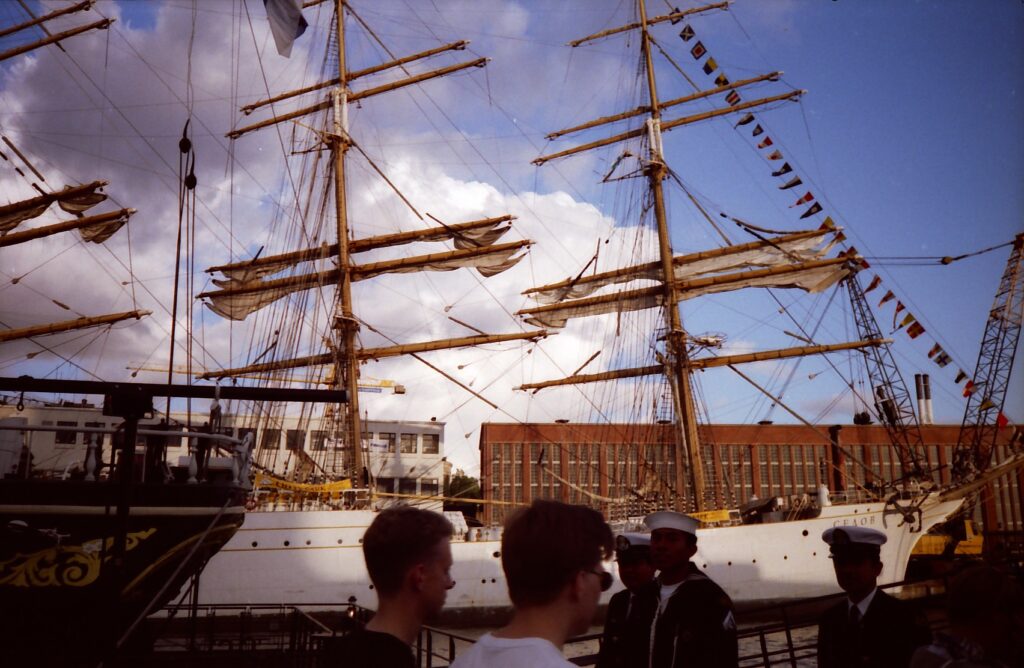
Sir Winston Churchill (United Kingdom): A three-masted schooner that was one of the best-known vessels participating in the race.
The scout boat of Auran Tähti-Pojat: Local organizations also took part in the event with their own vessels.
Other well-known ships sailing in the Baltic Sea at the time included Kruzenshtern (Russia) and Christian Radich (Norway).
A Royal Visit
The most notable guest was Prince Philip, Duke of Edinburgh, who visited Turku to tour the ships and meet their crews. Prince Philip also attended the captains’ dinner at Turku Castle and had discussions with President Martti Ahtisaari of Finland.
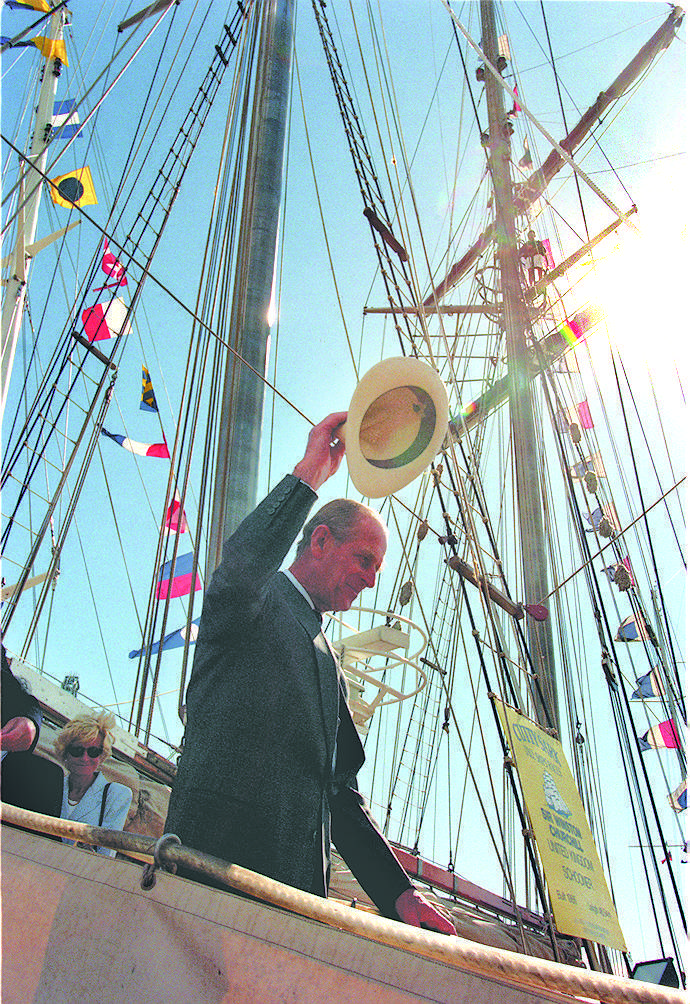
“The boat carrying Prince Philip on the Aura River traveled as far as St. Martin’s Bridge before turning back. The royal excursion was greeted with applause from both the crowds along the riverbanks and the crews of the ships. On many vessels, crew members lined the railings, waving and tipping their hats in greeting.”
Jamie Nieminen, society columnist for Turun Sanomat, 30 July 1996.
Prince Philip, Duke of Edinburgh, on the deck of the schooner Sir Winston Churchill. Photo: Arto Takala, Turun Sanomat.
Putting Maritime Turku on the World Map
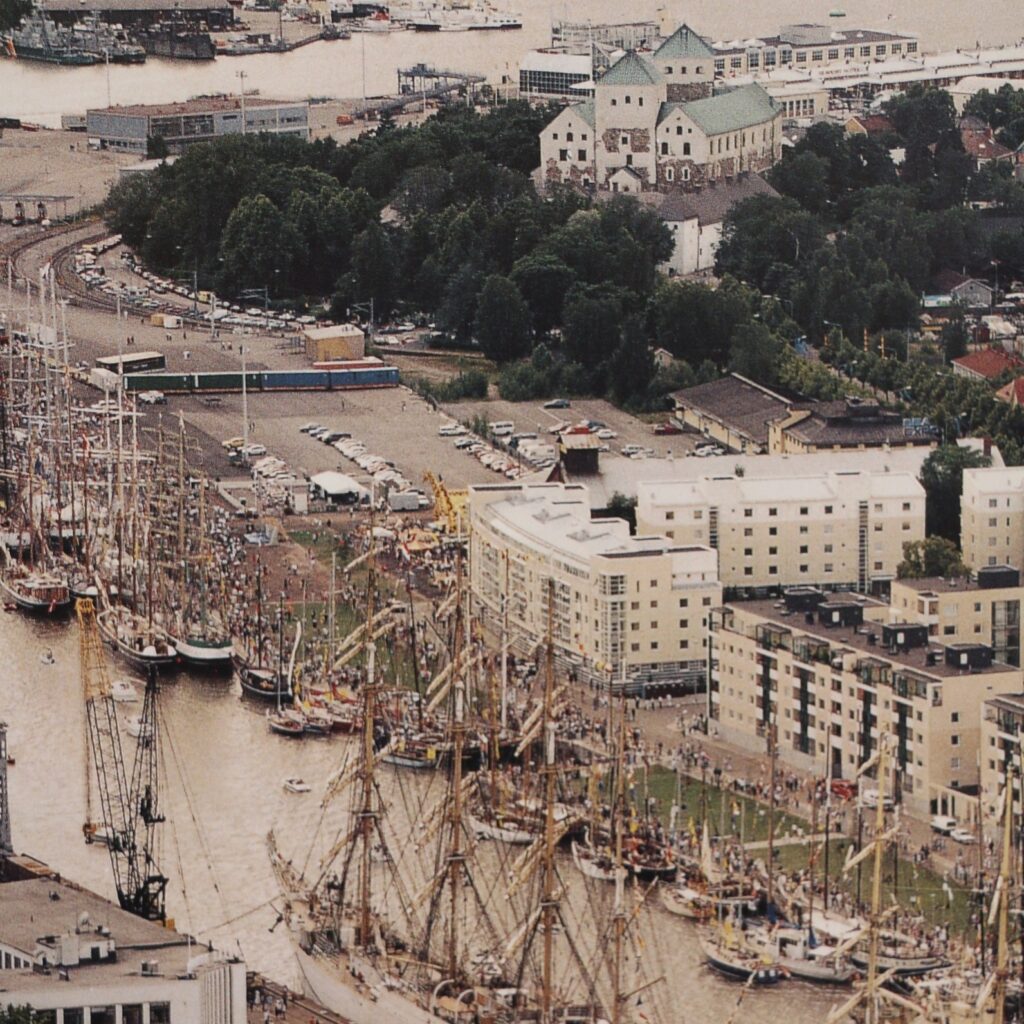
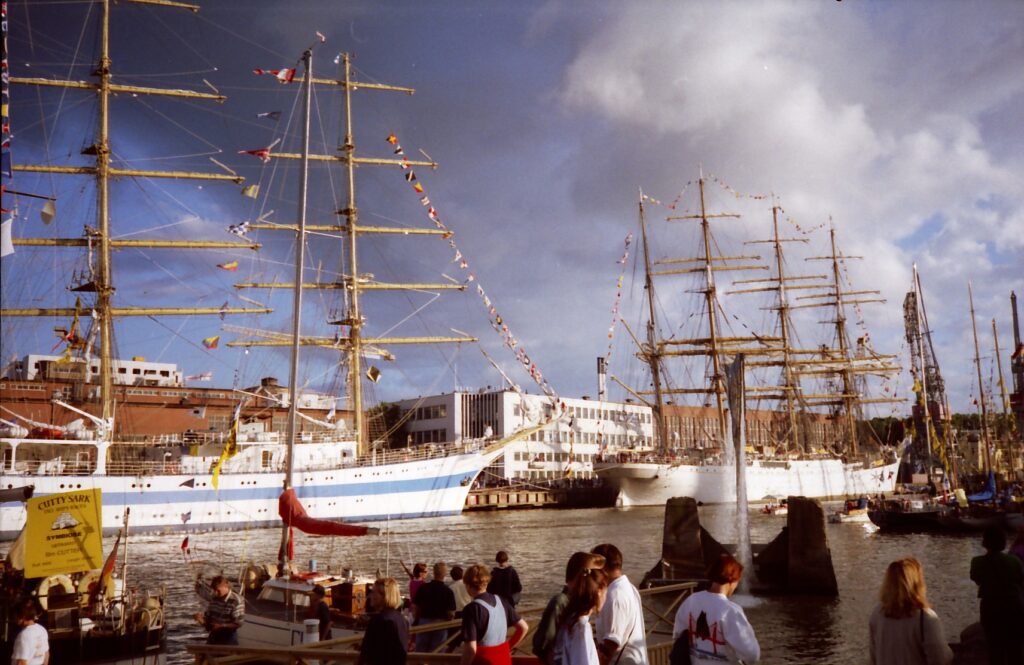
On the left, the 1996 event area. On the right, the sailing ships Mir and Sedov along the banks of the Aura River. Photo: Hannu Leppänen.
For the event, Turku renovated the western bank of the Aura River into a riverside boulevard, which marked the beginning of the lower river’s transformation from an industrial area into today’s cultural hub.
Turku served as a stopover port for the race, where crew changes were carried out and sports and entertainment events for the crews were organized.
The event captivated both locals and visitors and set the city on a path toward becoming a host of major maritime events in the Baltic Sea region. This later led to Turku being designated the event’s official Baltic “anchor port.”
Cutty Sark Tall Ships' Races 1996 logo
The main sponsor of the Cutty Sark Tall Ships Races—and part of its name—was still the whisky brand Cutty Sark in the 1996 and 2003 events in Turku.
By the time of the 2009 event, the British main organizer had dropped the sponsor, as it no longer fit well with the youth-oriented image of the event.