2009 – A Record-Breaking Year
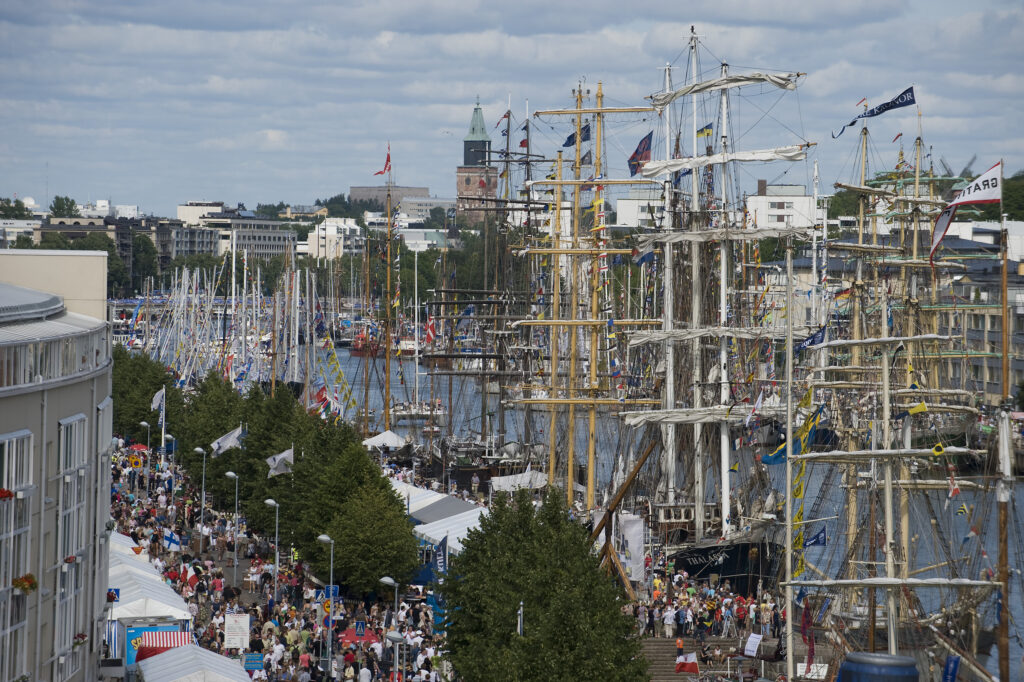
The 2009 Tall Ships Races is remembered, among other things, for a fleet record: as many as 115 sailing vessels arrived in Turku between 23 and 26 July, along with more than half a million visitors.In September 2006, the Mayor appointed a working group to prepare the 2009 event. With experience from two previous hostings, Turku organised the highly successful sailing ship event for the third time.
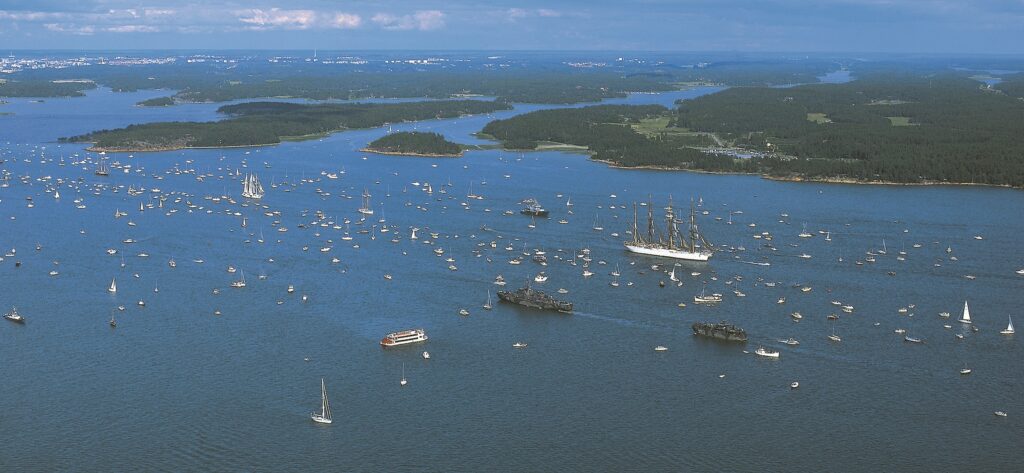
The Finnish Sailing Ship Foundation, in cooperation with the Finnish Lifeboat Institution, organized an escort voyage (escâder sailing) for the St. Petersburg–Turku leg of the 2009 Tall Ships Races. Nauvo was the last major escort port before Turku, and in the two days leading up to the fleet’s arrival, the harbour was extremely crowded with vessels heading toward Turku.
Not all ships even fit into the port, and some spent the night at anchor instead.
In Turku, they were met by a skilled harbour team responsible for berthing the vessels, with the largest ships assisted into place by tugboats.
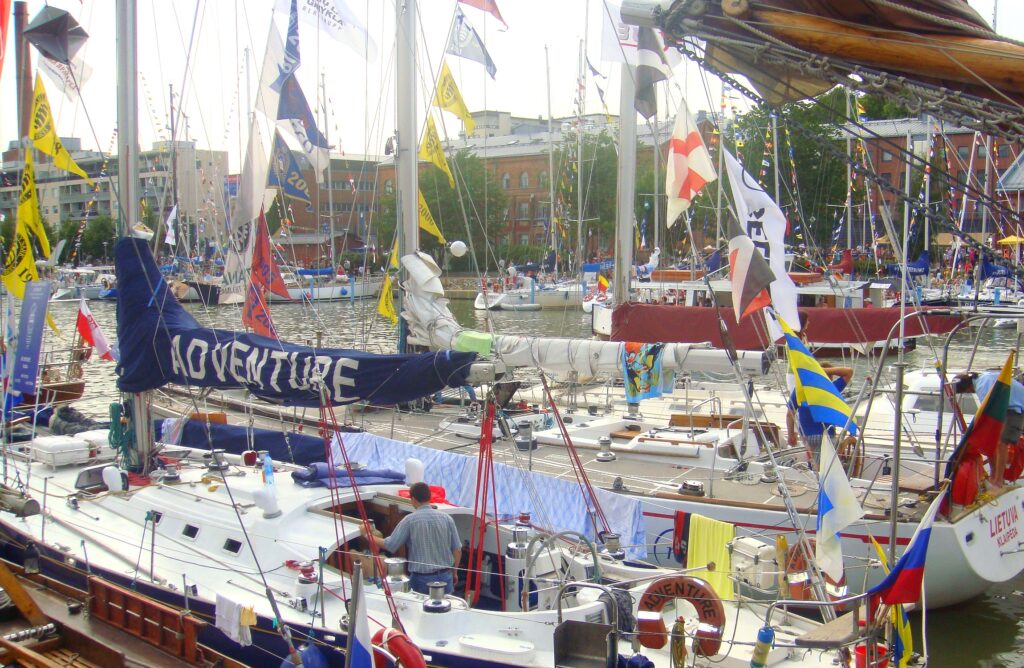
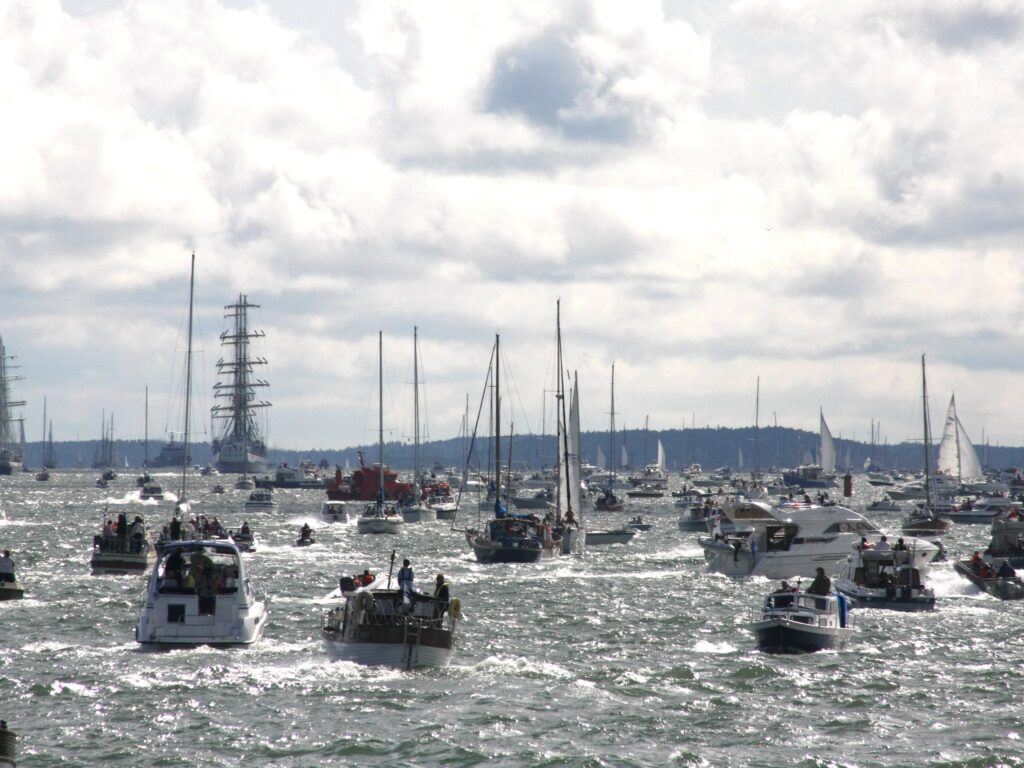
Left: in 2009, there were so many vessels that as many as four were moored side by side. Right: vessel congestion in the Airisto archipelago. Photos: Hannu Waher.
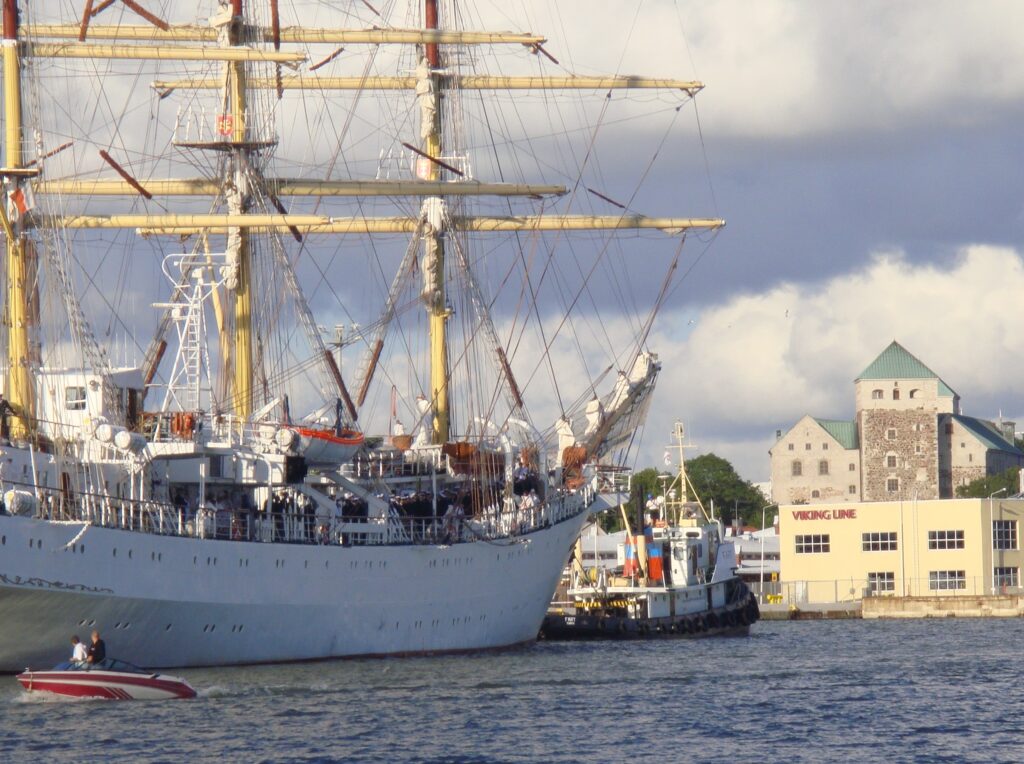
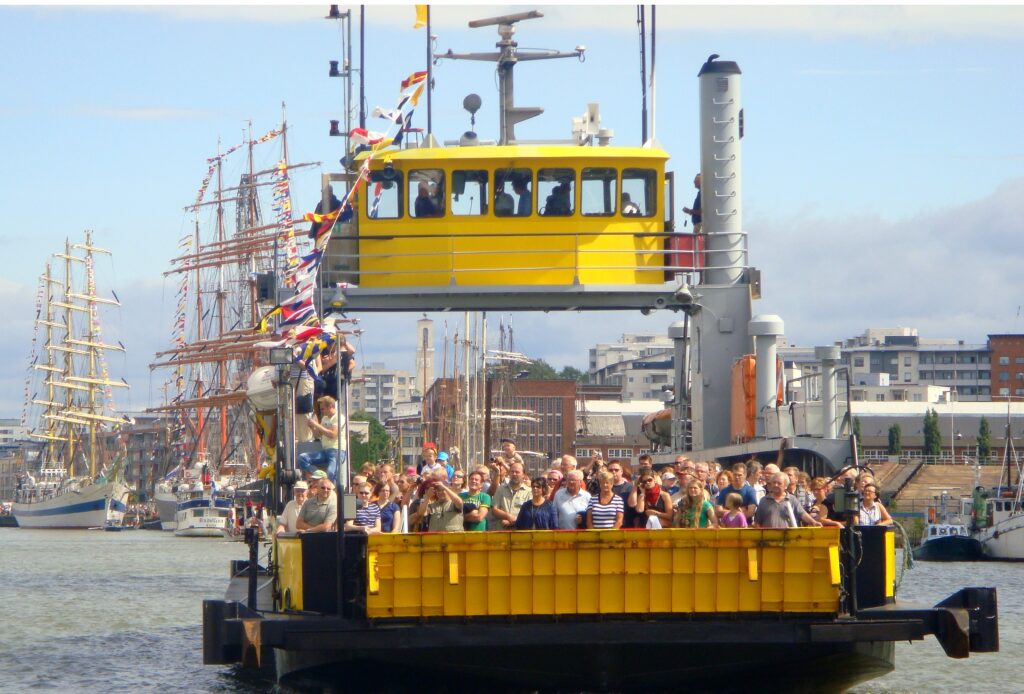
Left: Tugboats assist the Polish Dar Młodzieży into the Aura River. Right: Destia’s ferry was an essential service for crossing the river. Photos: Hannu Waher.
Lively opening ceremony
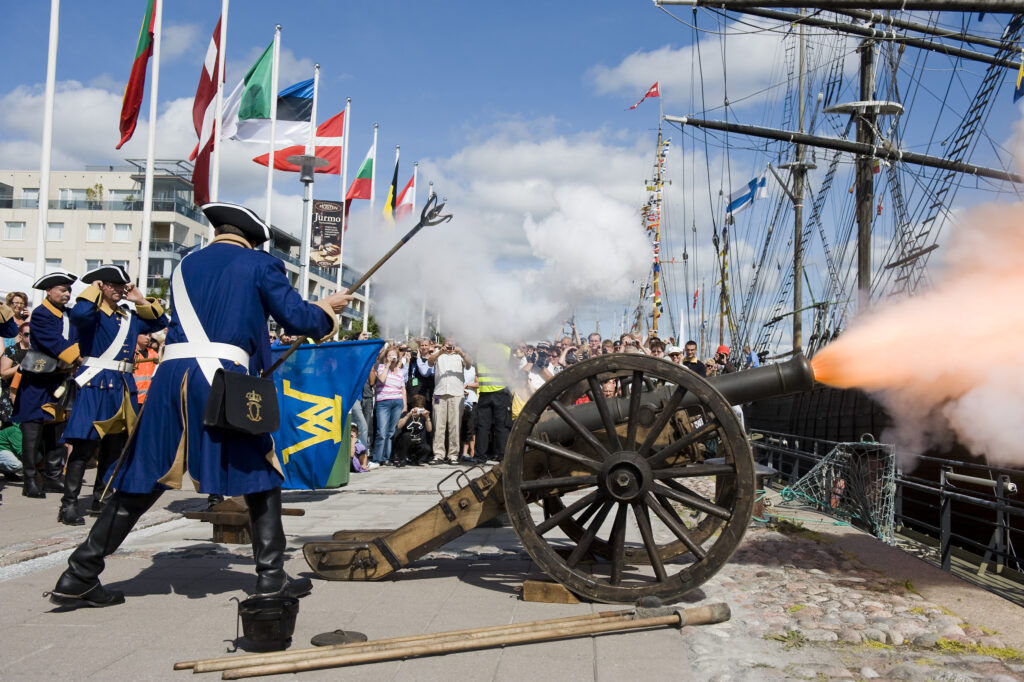
The opening ceremony, together with the splendid sunshine, drew crowds to the riverbanks and Varvintori. Sailing ships and smaller sailing vessels were moored in place, and the forest of masts was denser than ever before on the modern Aura River waterfront.
The Navy Band opened the ceremony with a prelude. Mayor Mikko Pukkinen delivered a speech, followed by Christer Samuelsson, Chairman of Sail Training International. In line with the “Sail For the Sea” theme, Minister of the Environment Paula Lehtomäki gave the government’s greeting. After this, the historical weapons association Arma Aboa fired a cannon salute, and the fleet responded with a foghorn salute, sounding their horns simultaneously.
Finally, the Navy Band performed again. The event host, Markku Heikkilä, better known as the “Föri man,” acted as auctioneer for a charity auction held after the ceremony, raising funds for the Archipelago Sea Protection Fund through an art sale. A reception for invited guests began in Sigyn Hall.
Services and activities for the crews
The Crew Centre was established in the youth facilities of the Auran Panimo brewery.
The Crew Centre served as a rest and meeting place for the crews, offering computers and internet connections, guidance services, and leisure activities. Sony Finland provided a widescreen display and PlayStation games. It was also possible to have crew group photos taken with a name board.
Services at the Crew Centre were offered in Finnish, Swedish, English, Russian, German, Spanish, Italian, and French. A new feature was a blog created by director Risto Lahtinen: ccturku.blogspot.com, which collected many comments and photos during the event days.
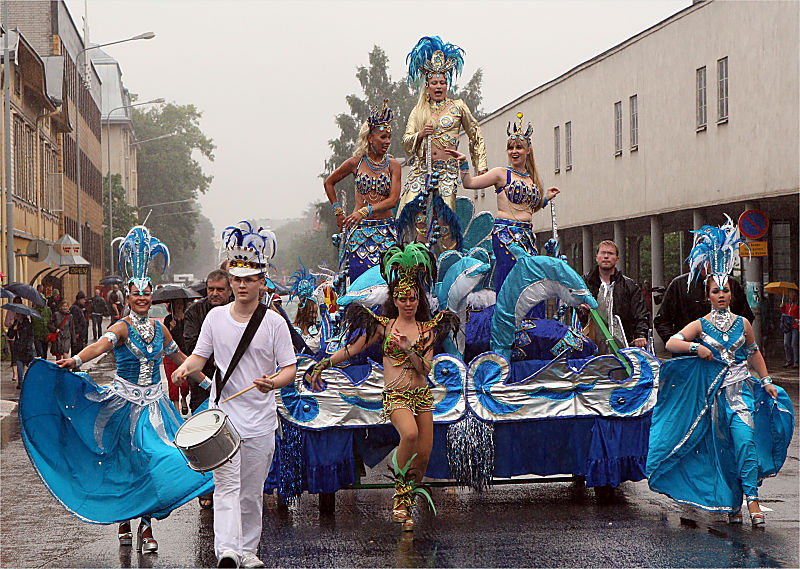
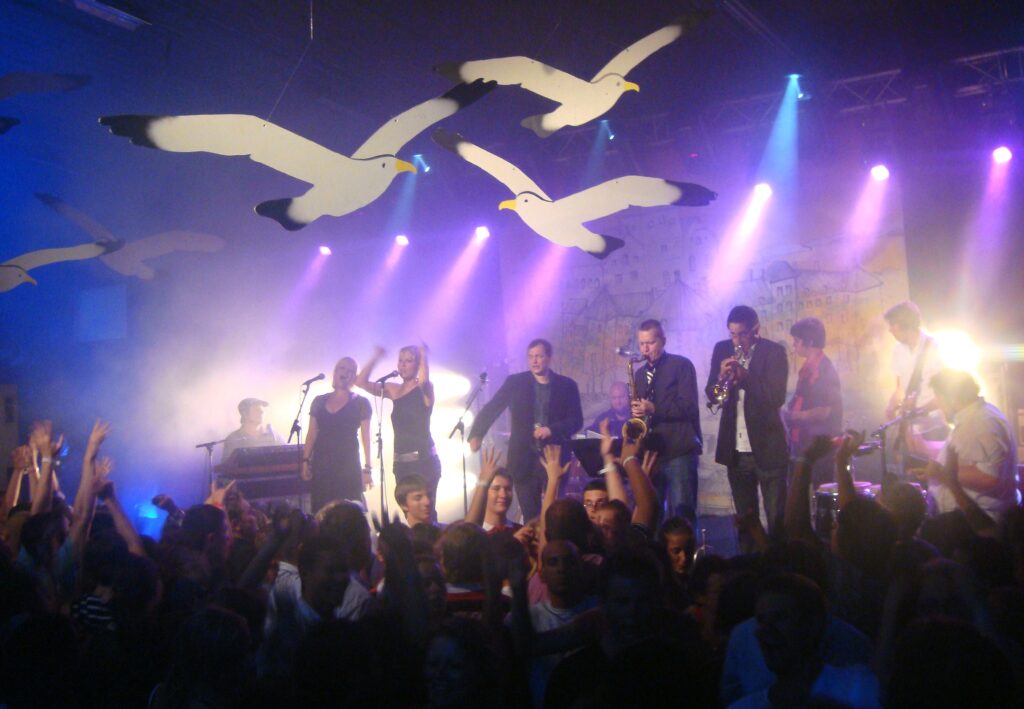
Left: a thunderstorm hit the crew parade, led by Samba Carioca. Right: the party band Huba energized the crew celebration. Photos: Hannu Waher.
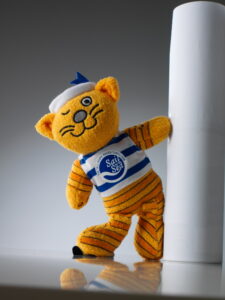
Race mascot
Looking toward new successes
According to a comprehensive visitor survey conducted at the event, visitor spending totalled €25,887,000. This economic boost in the middle of the July holiday season is one very practical reason why so many ports compete to host the Tall Ships Races.
In addition to economic impact, the event brought image benefits, improved cooperation between different parts of the city organisation, strengthened close ties with Baltic Sea port cities, generated worldwide media visibility, and supported actions for the Baltic Sea environment. Together, these provided many good reasons for Turku to look toward future sailing events.
After the ships departed via the Airisto parade toward the next port, the British main organiser made a surprise proposal to the city leadership on the deck of the escort vessel: could Turku also host the Tall Ships Races in 2011, when it would be the European Capital of Culture? This proposal could not be ignored, and the city immediately began planning a new sailing ship event together with the Turku 2011 Foundation.
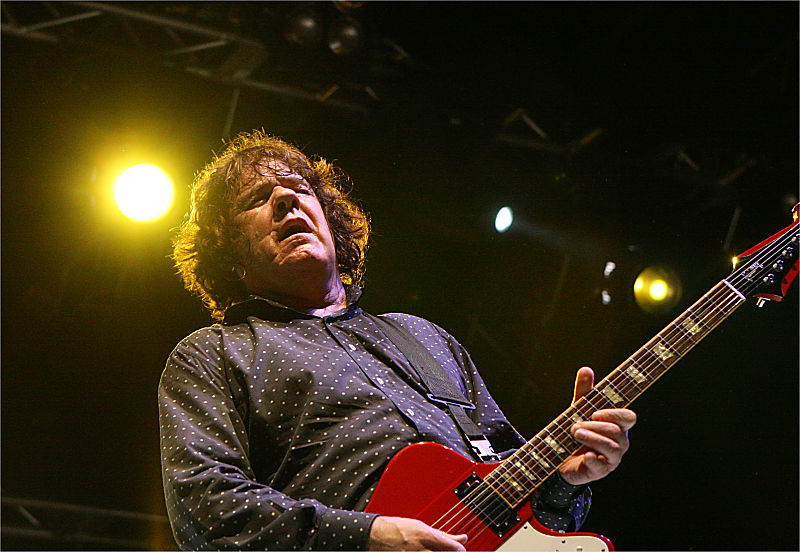
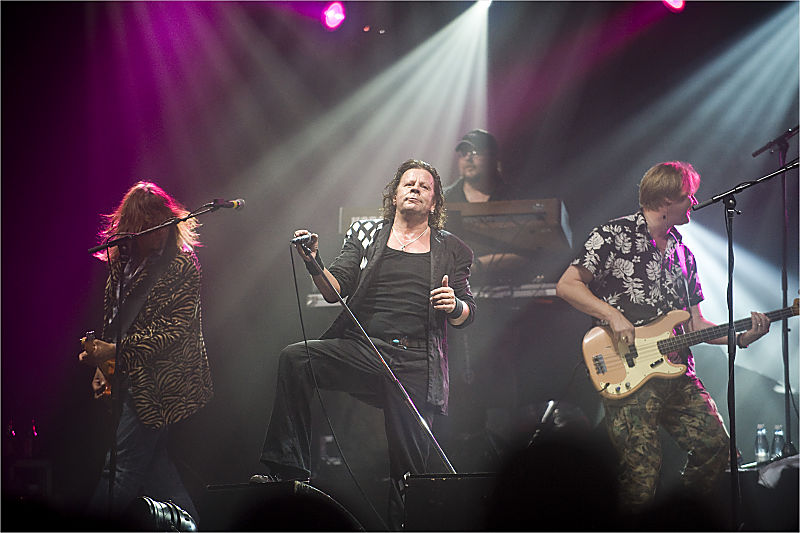
In the large Eastway event tent, there was top-class entertainment, including Gary Moore (left) and Popeda (right).