The Cutty Sark Tall Ships’ Races Turku 2003
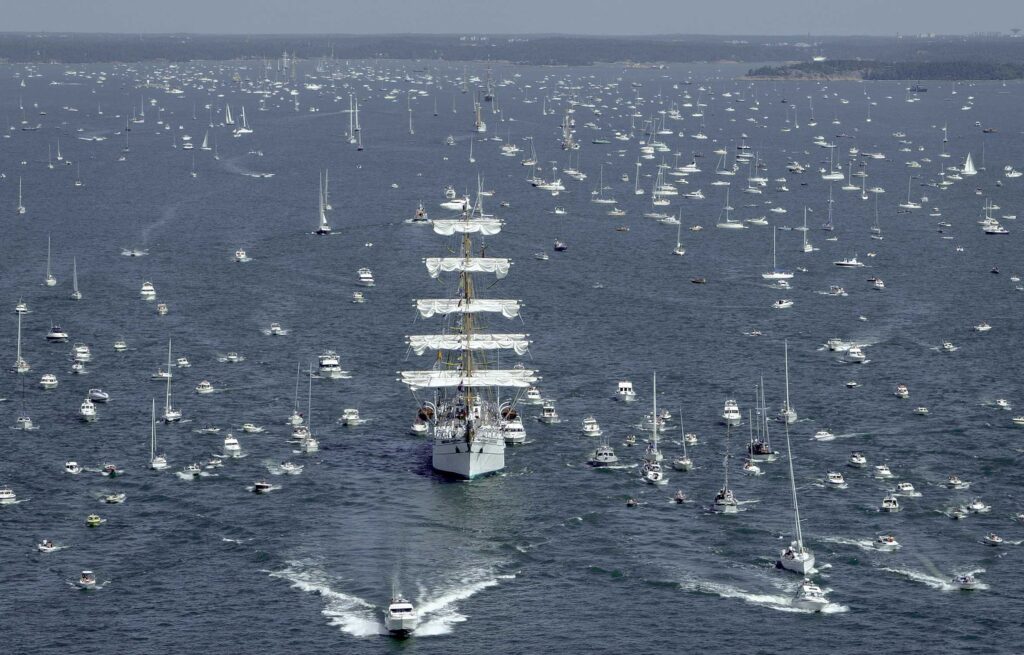
The 2003 Cutty Sark Tall Ships’ Races was a significant hosting for Turku, which consolidated the city’s position as one of Europe’s most popular and respected sailing ship ports. The event attracted an estimated half a million visitors to the banks of the Aura River over four days, from 31 July to 3 August. At the time, it was one of the largest public events ever held in Finland. Turku’s hosting was so successful that it was awarded Tourism Event of the Year 2003.
In 2003, the Cutty Sark Tall Ships’ Races sailed a route in the Baltic Sea that passed through four host ports from Poland to Germany.
This was the last time the race was known by its title sponsor’s name, Cutty Sark Tall Ships’ Races. The first official racing leg was sailed from Gdynia to Turku, and after a non-competitive passage between Turku and Riga, the second racing leg took place from Riga to Travemünde. The latter leg was affected by exceptionally severe weather conditions, which caused damage to parts of the fleet.
The event, however, was not originally secured through direct bidding. One of the scheduled ports on the race route, Saint Petersburg, unexpectedly withdrew only a year and a half before the event. A replacement Baltic Sea port was needed, and Turku stepped in. The necessary decisions were made quickly, and the event was organized on a tight preparation schedule.
.
.
.
Old and new guests
Turku was visited by several large A-class ships and numerous smaller sailing vessels. The first ship to arrive in the port was Windrose from the Cayman Islands.
A particularly successful vessel that year was the Finnish schooner Helena, which won the first race leg from Gdynia to Turku on corrected time.
Ship classes A, B, C and D
Class A: Fully rigged ships and barques (such as Dar Młodzieży or Tre Kronor).
Class B: Smaller traditional sailing vessels (such as Helena and Windrose).
Classes C and D: Modern sailing vessels that competed in their own categories.
At the event, familiar vessels from 1996 were seen again, along with interesting new arrivals:
Mir (Russia), one of the fastest Class A fully rigged ships in the world, was an impressive sight in the Port of Turku.
Nadezhda (Russia), another Russian giant.
Sedov (Russia): the world’s largest traditional sailing ship (a four-masted barque), which had by then been repainted from its 1996 white hull back to its original black colour.
Alexander von Humboldt (Germany), recognizable by its green sails and hull.
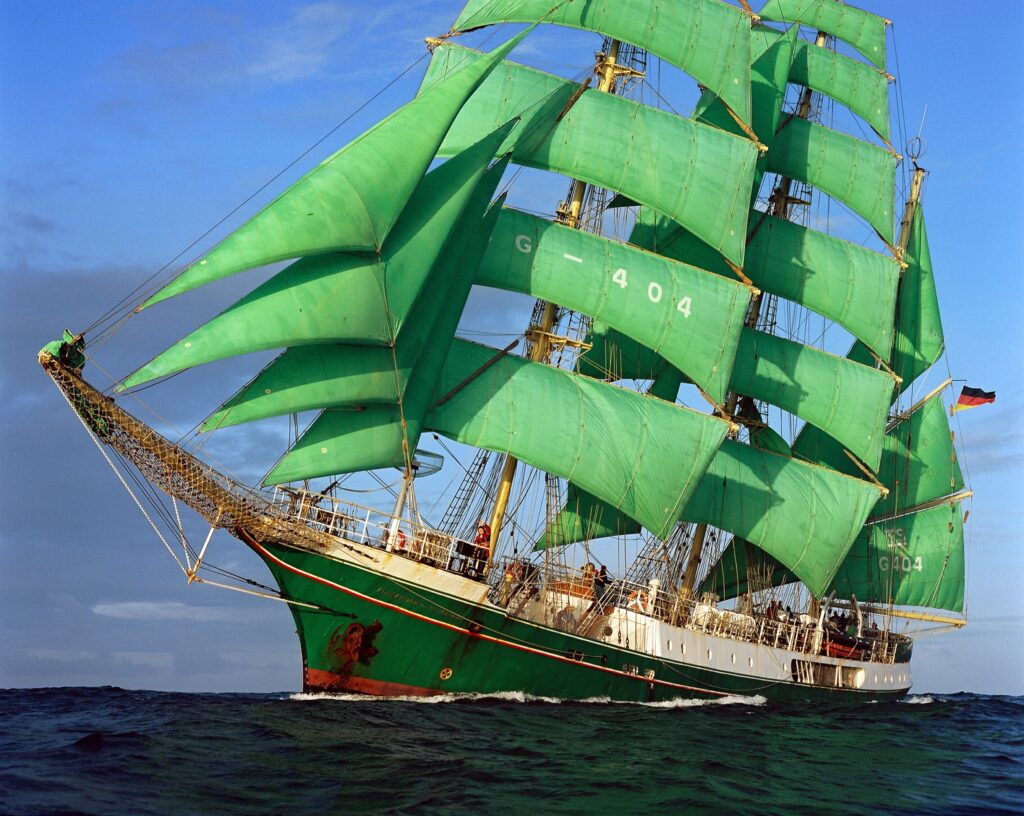
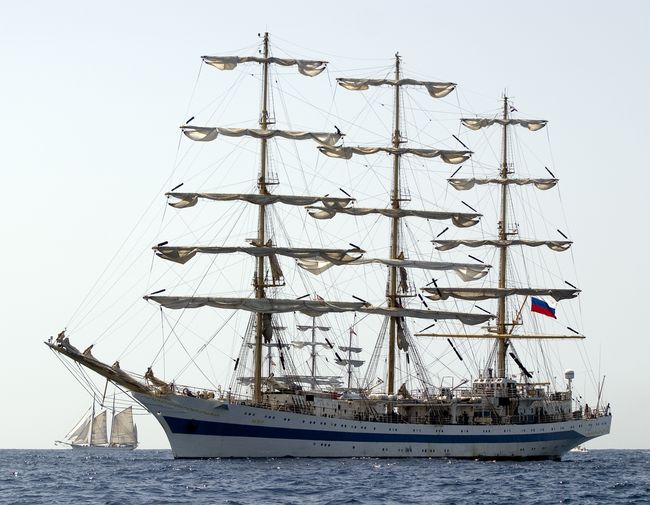
On the left, Alexander von Humboldt. On the right, the sailing ship Mir.
The fleet also included several other historically significant vessels, such as the Norwegian Sørlandet, the world’s oldest still-operational fully rigged ship, as well as the British ships Lord Nelson and Tenacious, which were designed to enable people with disabilities to sail as well.
Programme along the riverbanks
The opening ceremony of the event was held at Varvintori on Thursday, 13 July, once all the ships had arrived. The vessels marked the opening with a traditional foghorn salute. In addition to speeches, Arma Aboa fired ceremonial salutes with a historical cannon, and the Navy Band performed.
On Friday, the crew parade proceeded from Veistämöntori to the Paavo Nurmi Stadium, where the prize-giving ceremony for the Gdynia–Turku leg was held. The event area featured performances by many Turku-based music and dance groups, including well-known names such as Vilperin Perikunta, Paleface, and the Antti Sarpila Swing Band.
Public survey by Taloustutkimus Oy on the event
- The audience of the Tall Ships’ Races event was predominantly female, mainly composed of adults, slightly more highly educated than average, and largely residents of Turku or its surrounding areas.
- Nearly six out of ten visitors had already attended the event in the summer of 1996, and previous experience of the event had clearly sparked interest in attending again.
- Three out of four respondents said their expectations were met, and one in six said they were even exceeded. Half of the visitors reported being very satisfied with the event overall, and two out of five were fairly satisfied. Only one percent were somewhat dissatisfied, and no one reported being very dissatisfied.
- On average, each visitor spent about 40 euros, bringing the estimated total expenditure to nearly 10 million euros.